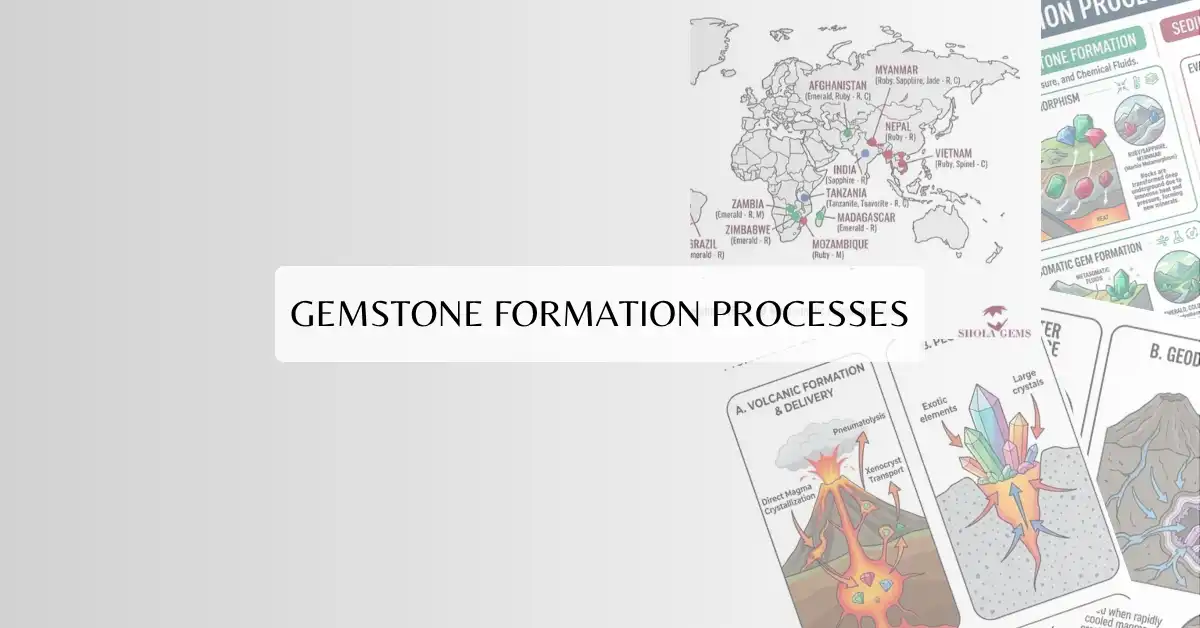
Gemstones, nature’s exquisite treasures, owe their origins to complex geological processes occurring deep within the Earth’s crust. Their formation and deposit are primarily linked to three types of geological activities: igneous, metamorphic, and sedimentary processes, each contributing uniquely to the diversity and quality of gems found worldwide.
Gems from Igneous Rocks
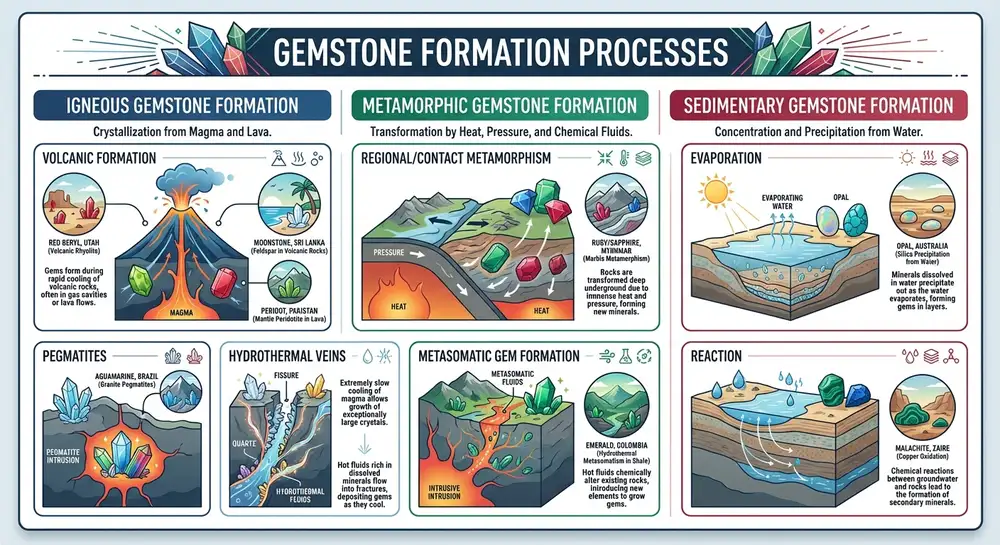
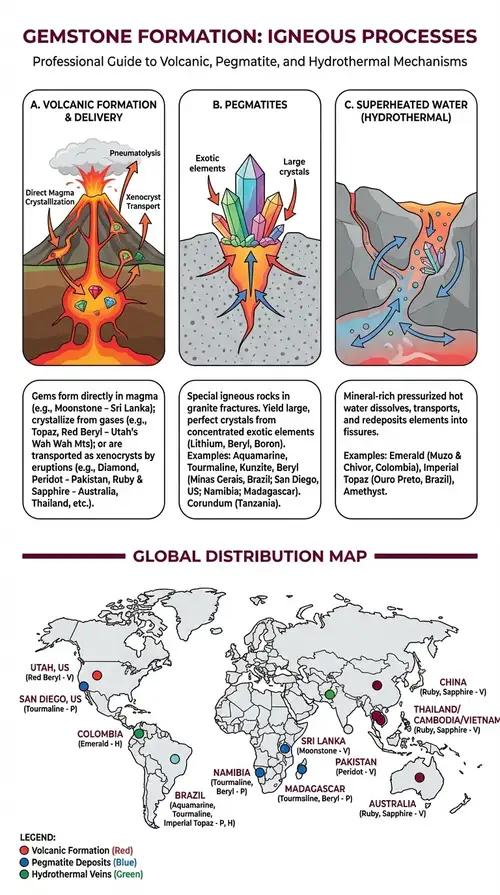
Gemstones from an igneous origin form within cooling magma or lava. Volcanic activity plays a crucial role, with gems crystallising directly from magma, forming in mineral-rich gases or being transported as xenocrysts from deep within the mantle. Notable examples include moonstones from Sri Lanka, red beryl from Utah, and diamonds carried swiftly to the surface by kimberlite pipes. Pegmatites, associated with granite, represent the final cooling phase of magma, producing some of the largest and rarest crystals such as aquamarine and tourmaline from Minas Gerais, Brazil. Hydrothermal processes utilise superheated, mineral-rich fluids, forming gems such as emeralds in Colombia and imperial topaz in Brazil.
Gems from Metamorphic Rocks
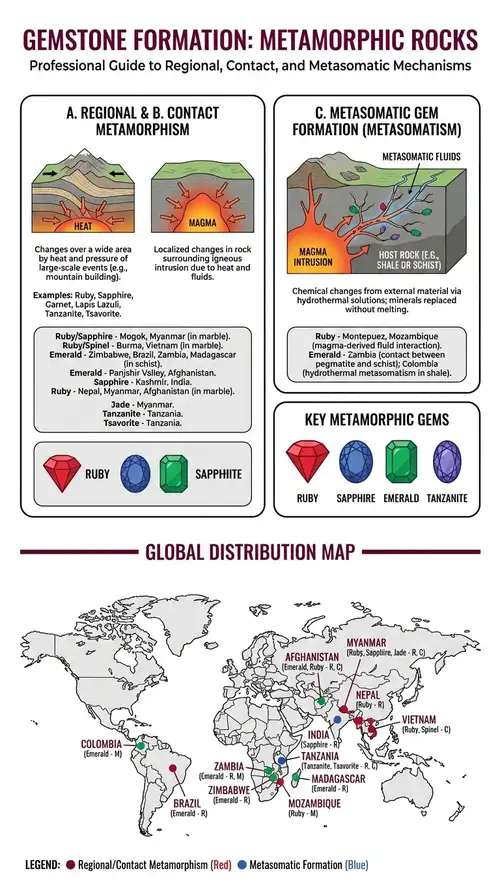
Metamorphic gemstone formation arises from existing rocks subjected to intense heat and pressure without melting. Regional metamorphism, linked with mountain-building events, results in precious gems like rubies, sapphires, and garnets. Contact metamorphism occurs locally around igneous intrusions, “baking” surrounding rocks and forming valuable deposits. Metasomatism, involving chemical replacement through mineral-rich fluids, creates notable ruby and emerald deposits, such as those in Mozambique and Zambia.
Gems from Sedimentary Rocks
Near Earth’s surface, water-driven sedimentary processes cause mineral-rich solutions to crystallise as gemstones like opal in Australia or malachite in Africa. Geodes, hollow rocks lined with crystals like amethyst, form through gas bubbles and mineral deposition in cavities.
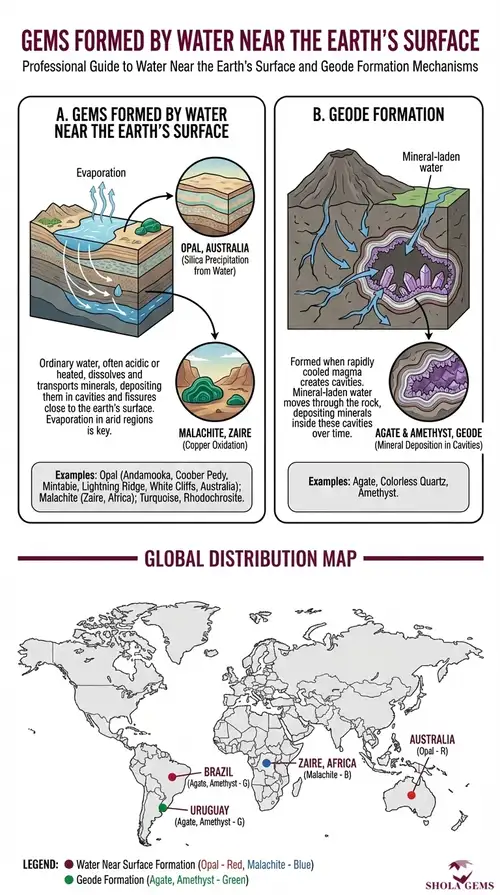
Table of Gemstone Formation Process
| Major Formation | Specific Formation | Details Formation Process and Associated Gems (Examples) | Locations |
|---|---|---|---|
| I. Gems from Igneous Rocks | A. Volcanic Formation and Delivery | Gems form directly in magma (e.g., moonstone). / Gems crystallize from gases released during cooling (known as pneumatolysis) (e.g., topaz, red beryl). / Existing gems formed deep in the crust or mantle are transported to the surface as “passengers” or “foreign crystals” (xenocrysts) by violent eruptions in surrounding magma (e.g., diamond, peridot, ruby, sapphire, zircon) | Volcanic Formation (Pneumatolysis) Red Beryl: Utah’s Wah Wah Mountains (the only known source, formed from gasses released by hydatite) |
| Volcanic Formation (Direct Crystallization) Moonstone: Sri Lanka (formed directly in magma) | |||
| Volcanic Delivery (Xenocrysts via Alkali-Basalt) Peridot: Pakistan, high in the Himalayas. / Sapphire/Corundum: Australia, Thailand, Cambodia, Nigeria, China, and Southern Vietnam (transported by alkali-basalt) | |||
| B. Pegmatites | Special igneous rocks associated with cooling granite that form in fractures in surrounding rock. These deposits often yield some of the largest and most perfect gem crystals. They are formed when exotic elements (like lithium, beryllium, boron, manganese, and fluorine) are concentrated in the final portions of cooling granite. Examples include: aquamarine, multicolored tourmaline, kunzite, and pink and yellow beryl | Pegmatites Aquamarine, Tourmaline, Kunzite, Beryl: Minas Gerais, Brazil (world’s most important pegmatite source). / Tourmaline: San Diego County, California, US. / General Localities: Namibia and Madagascar. / Corundum (rare pegmatites): Tanzania. | |
| C. Superheated Water (Hydrothermal) | Mineral-rich pressurized hot water (hydrothermal fluid) that rises from a hot rock intrusion. These fluids dissolve, transport, and redeposit elements into fissures and cavities in the surrounding rock as they cool. Examples include: amethyst, imperial topaz, and in rare circumstances, emerald. | Superheated Water (Hydrothermal Veins) Emerald: Muzo, Colombia and Chivor, Colombia . / Imperial Topaz: Ouro Preto, Brazil (world’s only known commercial deposits). / Amethyst: (Key locality listed under hydrothermal gems, but no specific mine given). | |
| II. Gems from Metamorphic Rocks | A. Regional Metamorphism | Changes in rock type and minerals over a wide area, caused by the heat and pressure of large-scale geological events like mountain building. Examples include: ruby, sapphire, garnet, lapis lazuli, tanzanite, and tsavorite. | Regional/Contact Metamorphism Ruby/Sapphire: Mogok, Myanmar (Burma) (metamorphic process acted on marble). / Ruby/Spinel: Burma and Vietnam (formed in marble, altered limestone). / Emerald: Zimbabwe, Brazil (e.g., Belmont Mine), Zambia, and Madagascar (found in schist host rock). / Emerald: Panjshir Valley, Afghanistan (Himalayas). / Sapphire: Kashmir, India (Himalayas). / Ruby: Nepal and Myanmar (Himalayas). / Jade: Myanmar (Burma). / Tanzanite (Zoisite): Tanzania (only commercial source). / Tsavorite (Garnet): Tanzania (Mozambique belt in East Africa). / Ruby: Afghanistan (from marble). |
| B. Contact Metamorphism | Localized changes in the rock surrounding an Igneous Intrusion due to heat and fluids from the magma. This process can produce materials similar to regional metamorphism. | ||
| C. Metasomatic Gem Formation (Metasomatism) | A specific type of metamorphism where chemical changes occur because material is introduced from external sources, often via hydrothermal solutions. Minerals in the original rock are partially or completely replaced by new minerals without melting. This process is key in the formation of many ruby deposits. | Metasomatic Gem Formation Ruby: Montepuez, Mozambique (thought to be the world’s largest ruby source; magma-derived fluid interaction). / Emerald: Zambia (potential formation at contact between pegmatite and schist). | |
| III. Gems from Sedimentary Rocks | A. Gems Formed by Water Near the Earth’s Surface | Ordinary water, especially if acidic or heated, dissolves and transports minerals, depositing them in cavities, seams, and fissures close to the earth’s surface. Evaporation in arid regions is linked to some formation. Examples include: opal, turquoise, malachite, and rhodochrosite. | Formed by Water Near the Earth’s Surface (Evaporation) Opal: Eastern and central Australia, including Andamooka, Coober Pedy, Mintable, Lightning Ridge, and White Cliffs. |
| Formed by Water Near the Earth’s Surface (Reaction) Malachite: Zaire, Africa (formed by copper-rich solutions reacting with limestone). / Turquoise, Rhodochrosite: (Formation process described, but specific places not cited). | |||
| B. Geode Formation | Formed when magma brought rapidly to the surface cools, creating cavities. Later, mineral-laden water moves through the rock and deposits new minerals inside these cavities. These often contain agate or colorless quartz, and sometimes gem-quality amethyst. |
Secondary Deposits
Furthermore, gemstones often concentrate in secondary deposits, where they have been eroded, transported, and redeposited by natural forces, creating alluvial and eluvial deposits. These geological marvels offer insight into Earth’s dynamic interior and provide the precious gems cherished worldwide.
| Deposit Type | Gemstone and Example Location(s) | Source of Gemstone (Primary Formation) |
|---|---|---|
| Alluvial Deposits (Placers) | Ruby/Sapphire: Thailand, Cambodia, Southern Vietnam (weathered from alkali-basalt carriers). / Ruby/Fancy Sapphire: Luc Yen Valley, Vietnam. / Corundum: Near Pailin, Cambodia. / General Gems: Sri Lanka and Umba River Valley in Tanzania. | Various primary sources (e.g., volcanic, metamorphic). |
| Alluvial Deposits | Jadeite Boulders: Uru River, Myanmar (derived from Tawmaw deposits). | Formed originally in primary rock. |